


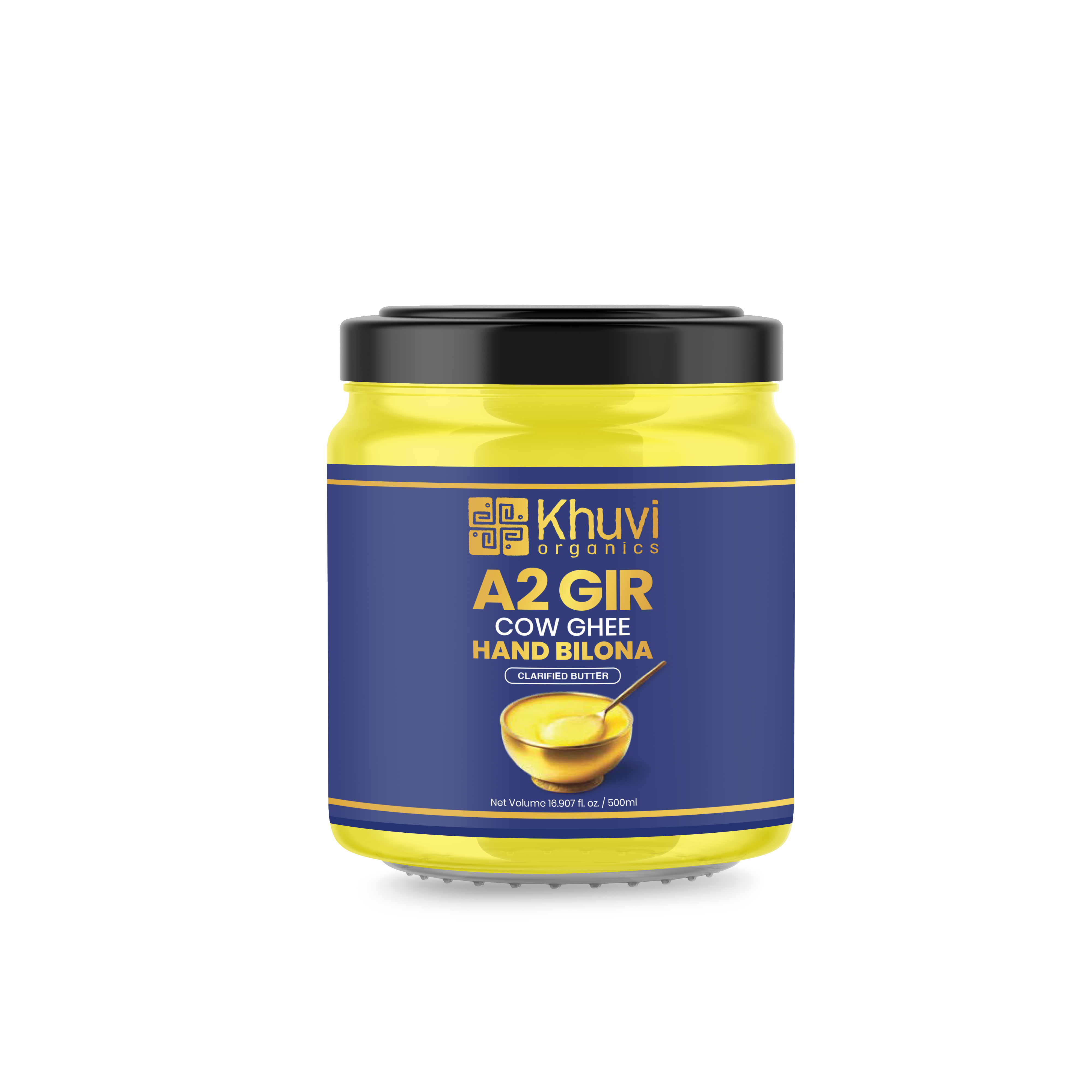
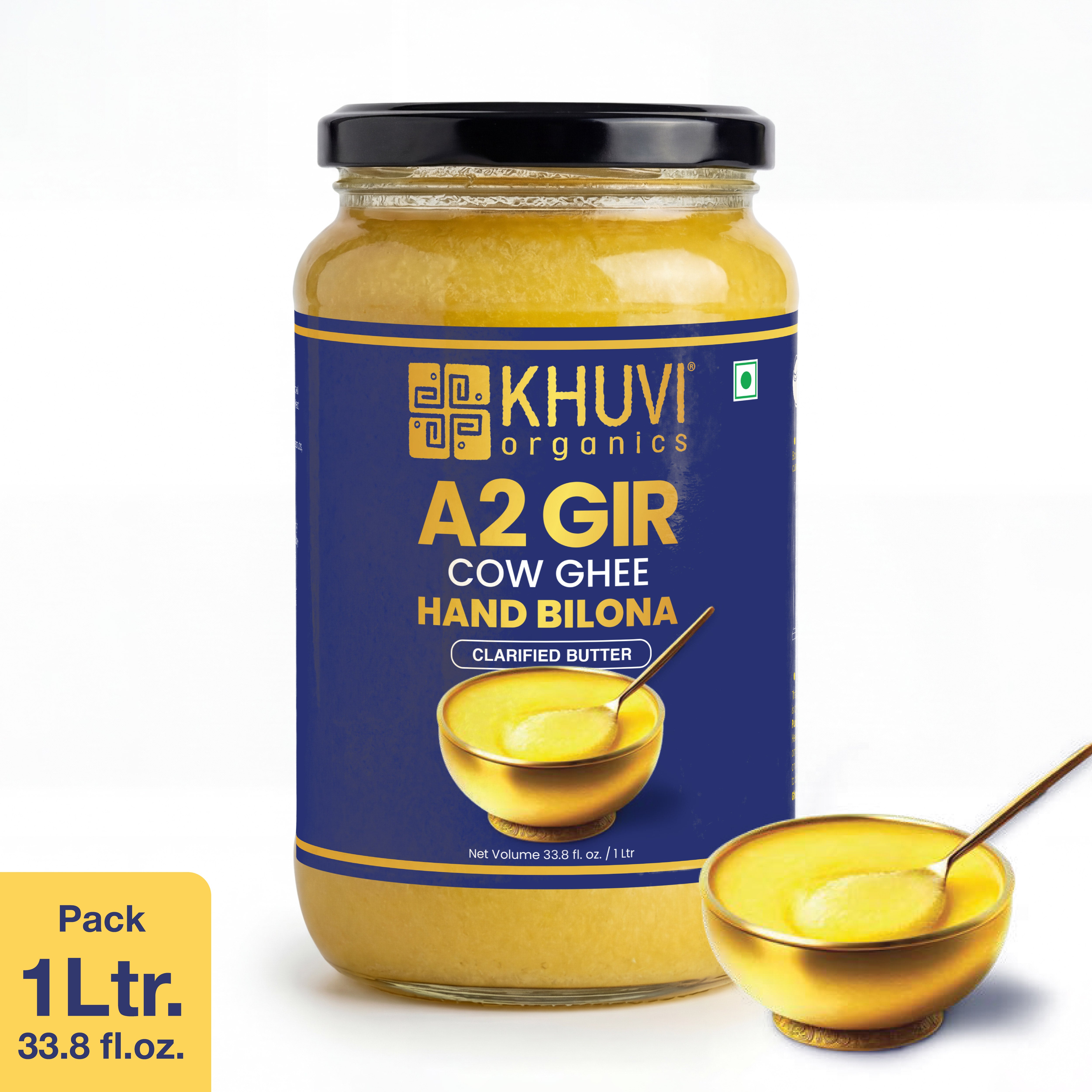
Hand Bilona A2 Gir Cow Pure Ghee
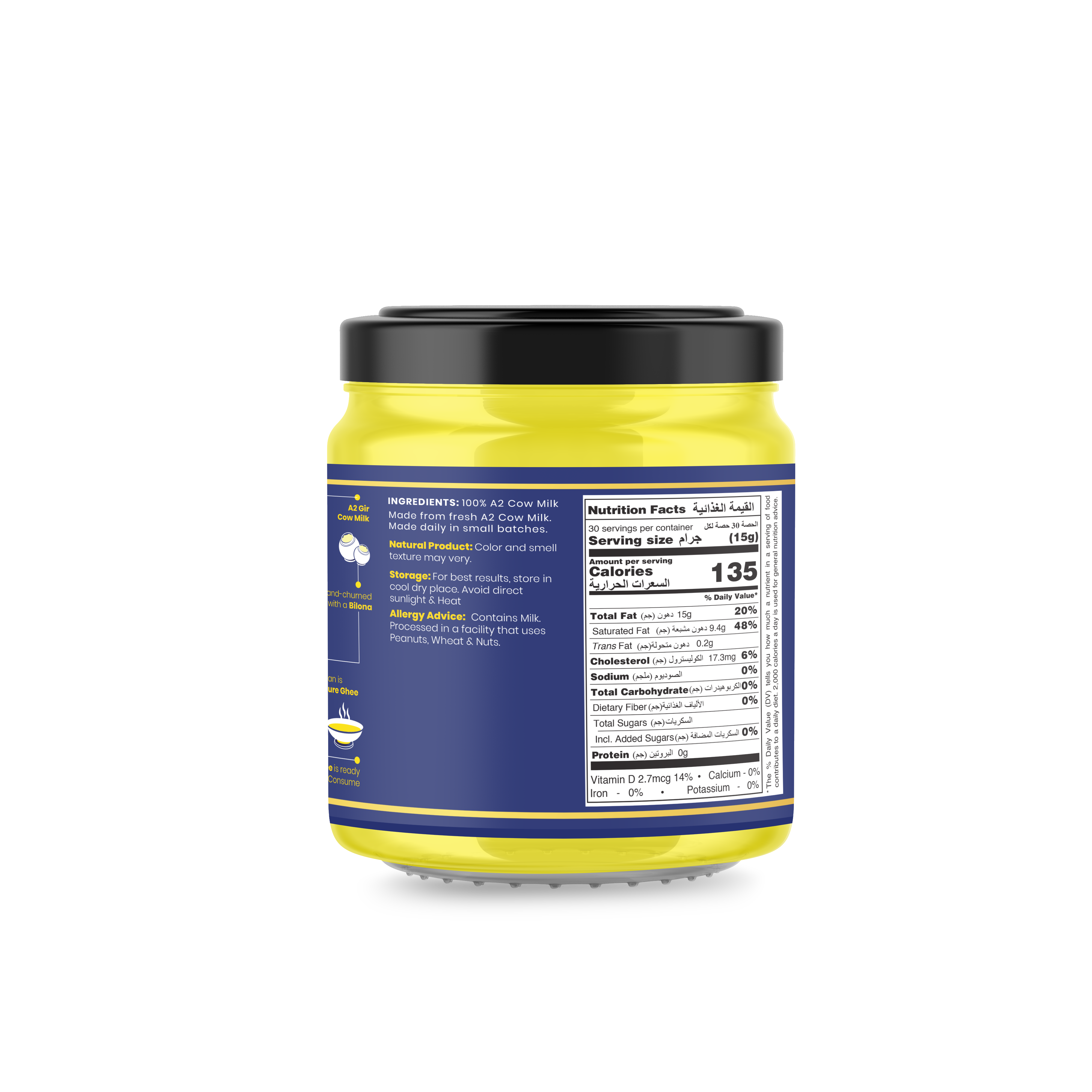
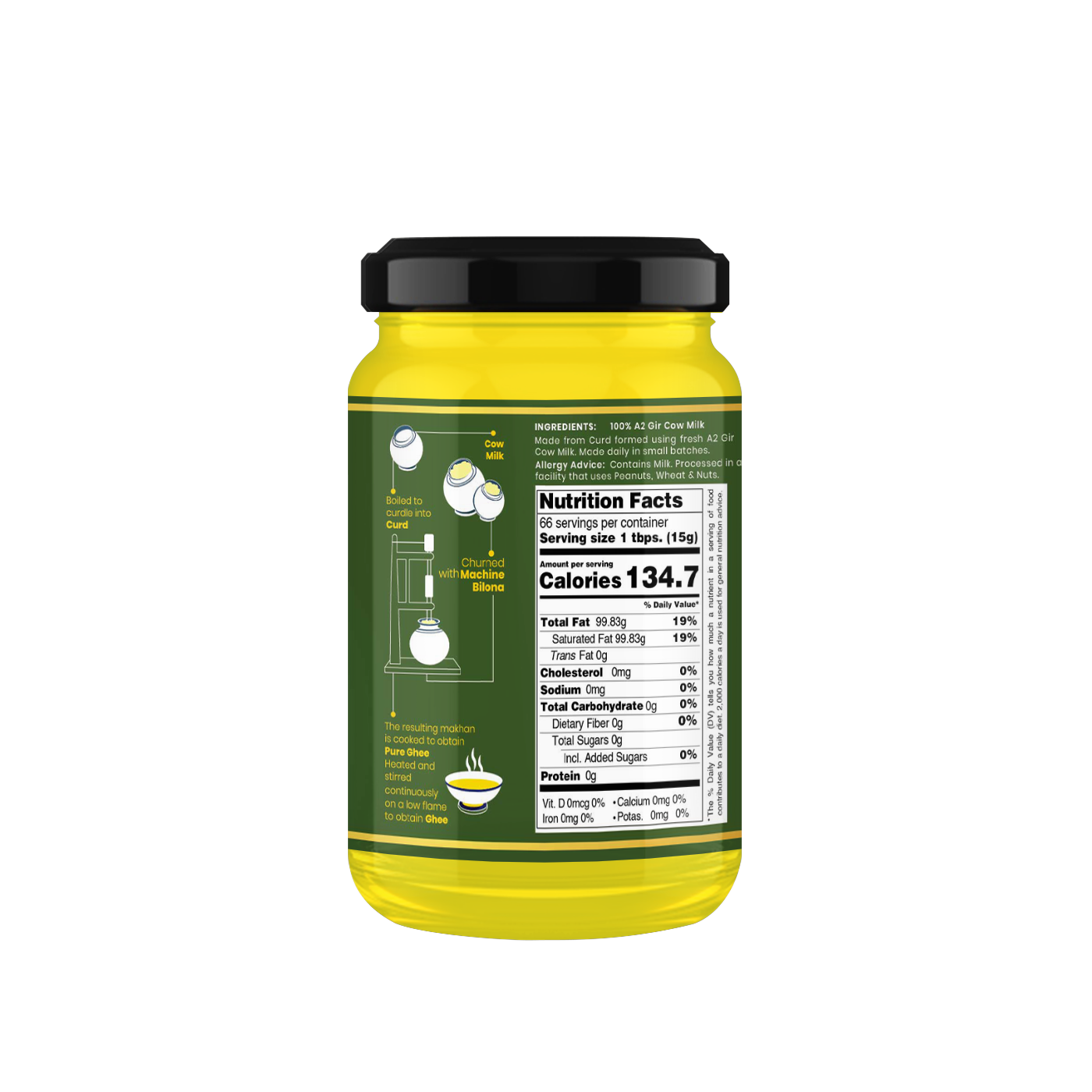
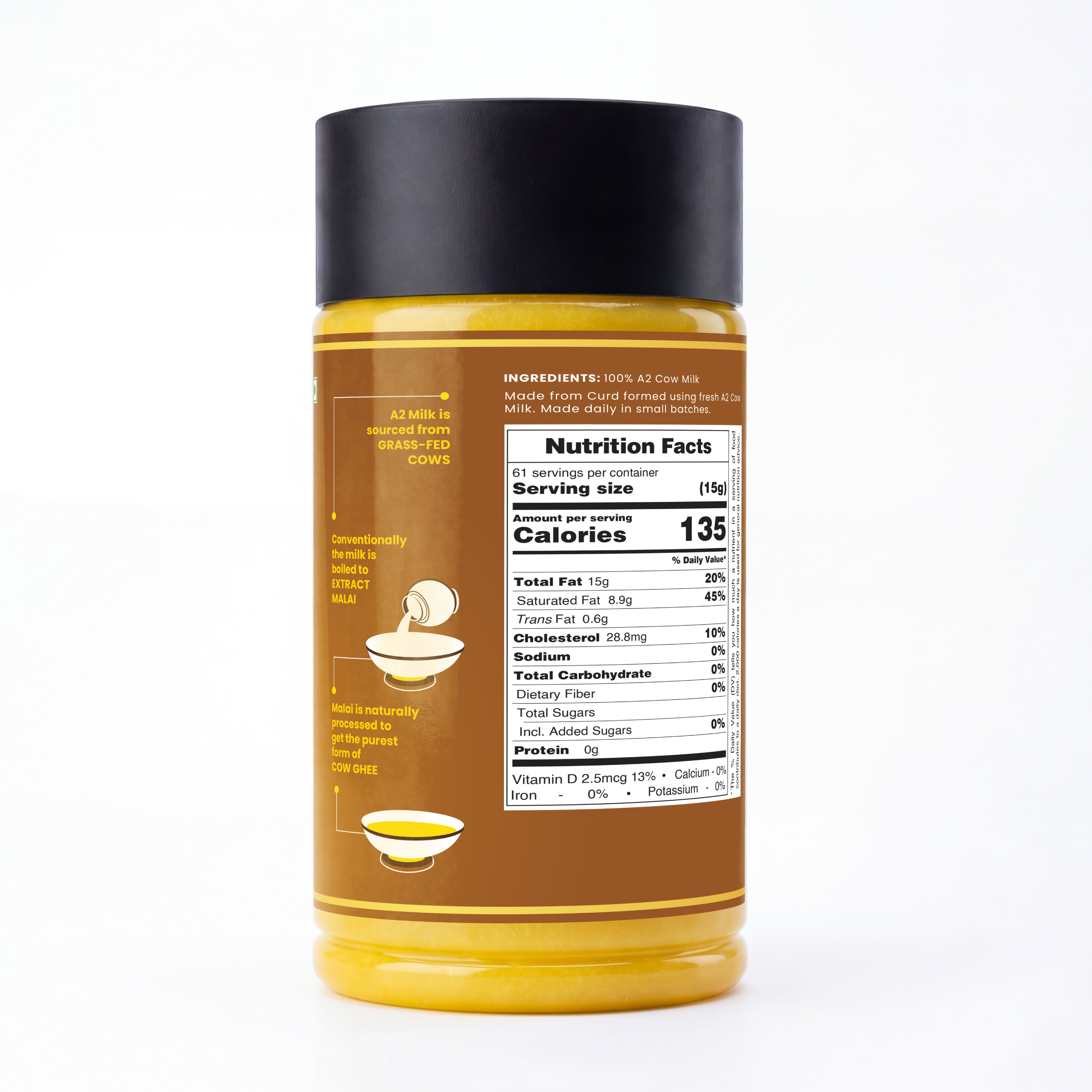
Ingredient: Gir A2 Cow Milk

Pairs well with
Free Shipping Across India
Express Delivery Available
7 days Return/Exchange
Hand Bilona A2 Gir Cow Pure Ghee
If you have any questions, you are always welcome to contact us. We'll get back to you as soon as possible, within 24 hours on weekdays.
-
Shipping Information
Use this text to answer questions in as much detail as possible for your customers.
-
Customer Support
Use this text to answer questions in as much detail as possible for your customers.
-
FAQ’s
Use this text to answer questions in as much detail as possible for your customers.
-
Contact Us
Use this text to answer questions in as much detail as possible for your customers.
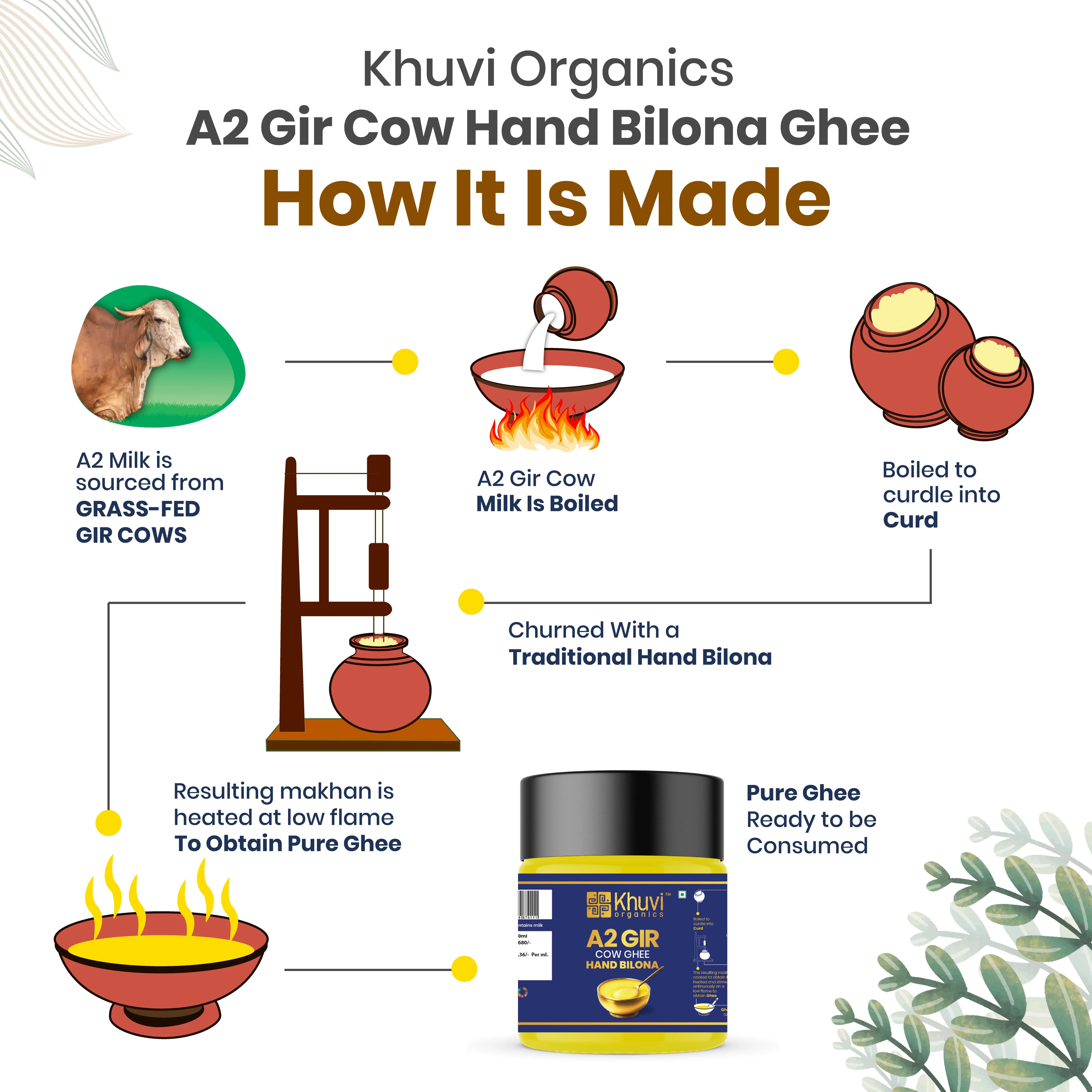
Hand Bilona A2 Gir Cow Ghee is a high-quality, traditional ghee made from the milk of the indigenous Gir cow breed. This ghee is prepared using the hand churning method, also known as "Bilona" method, which involves churning curd made from cow's milk in a wooden churner to extract butter. The butter is then simmered to obtain pure, golden-yellow ghee.
Hand Bilona A2 Gir Cow Ghee is 100% pure and free from any added preservatives or chemicals. It has a rich, nutty flavor and a distinct aroma that makes it perfect for cooking a variety of Indian dishes. This ghee is also known to have several health benefits due to its high nutritional value.
Hand Bilona A2 Gir Cow Ghee is available in various quantities and is a perfect addition to your kitchen essentials. Use it to add flavor to your meals or to make your favorite sweets and desserts. Experience the goodness of pure, traditional ghee with Hand Bilona A2 Gir Cow Ghee.
Pure and Traditional: Making Hand Bilona A2 Gir Cow Ghee
- Collection of milk: The first step is to collect the raw A2 Gir cow milk in a clean and hygienic container. This milk is then allowed to rest for a few hours, allowing the cream to rise to the top.We ensure the calves are fed their mother's milk before using it for making Ghee.
- Skimming the cream: Once the cream has risen to the top, it is carefully skimmed off using a wooden spoon or a traditional bilona machine. This cream is then added to a clay pot or a brass urn.
- Churning the cream: The cream is then churned using a bilona, which is a traditional Indian wooden hand-churner. The bilona is operated manually, and the cream is churned for several hours until butter is obtained.
- Separation of buttermilk: The butter is then separated from the buttermilk using a muslin cloth. The buttermilk is kept aside and can be used for making paneer or added to other recipes.
- Heating the butter: The butter is then heated in a heavy-bottomed kadhai or pot over a slow flame. This is done to remove any moisture from the butter and to get a rich golden-brown color.
-
Straining and storing the ghee: Once the ghee is ready, it is strained through a muslin cloth to remove any impurities. The ghee is then allowed to cool and solidify, after which it can be stored in an airtight container for future use.
What are the Benefits?
What is Machine Bilona A2 Cow Ghee?
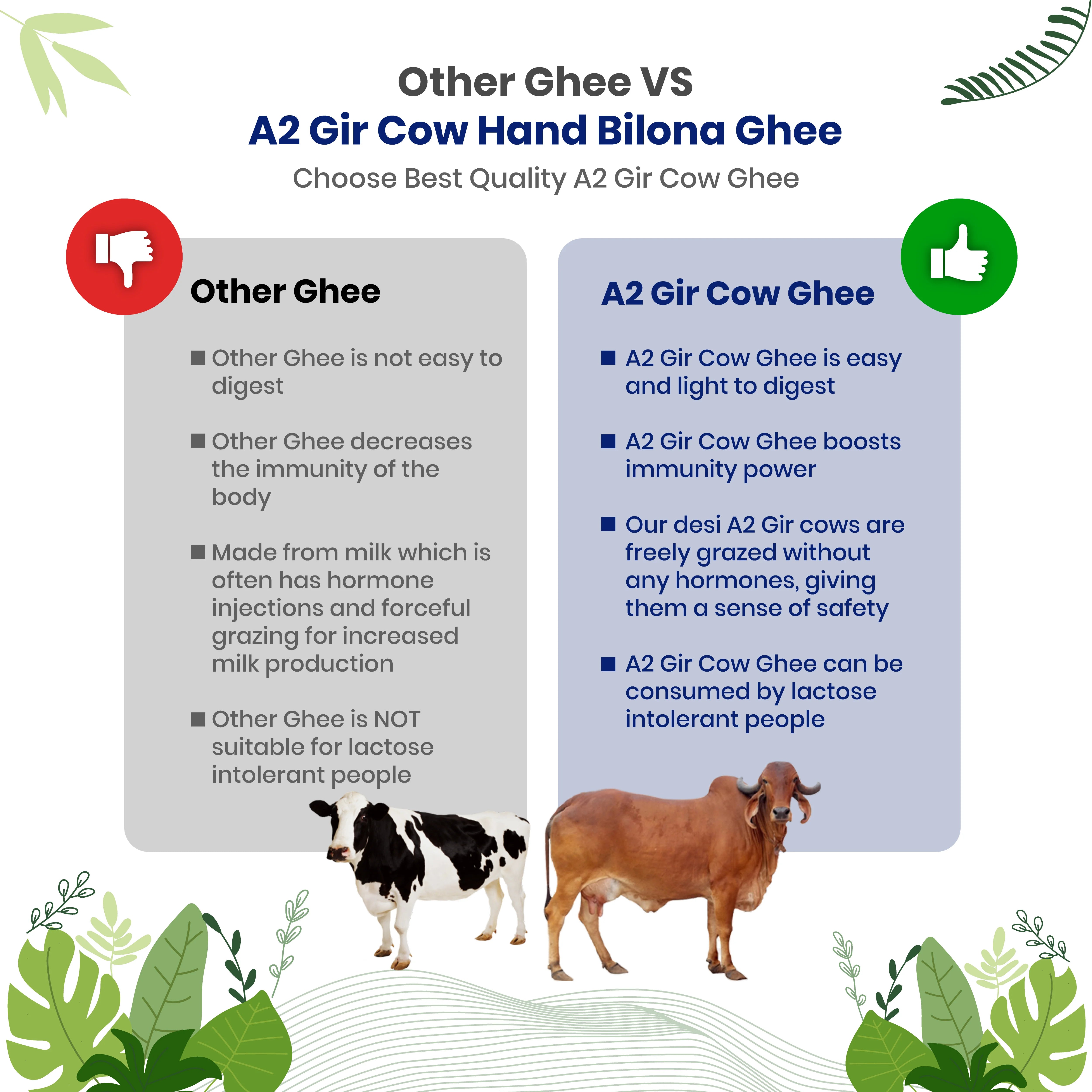
What makes Machine Bilona A2 Cow Ghee different from regular ghee?
What are the health benefits of Machine Bilona A2 Cow Ghee?
How should I use Machine Bilona A2 Cow Ghee?
How should I store Machine Bilona A2 Cow Ghee?
Is Machine Bilona A2 Cow Ghee suitable for people with lactose intolerance?
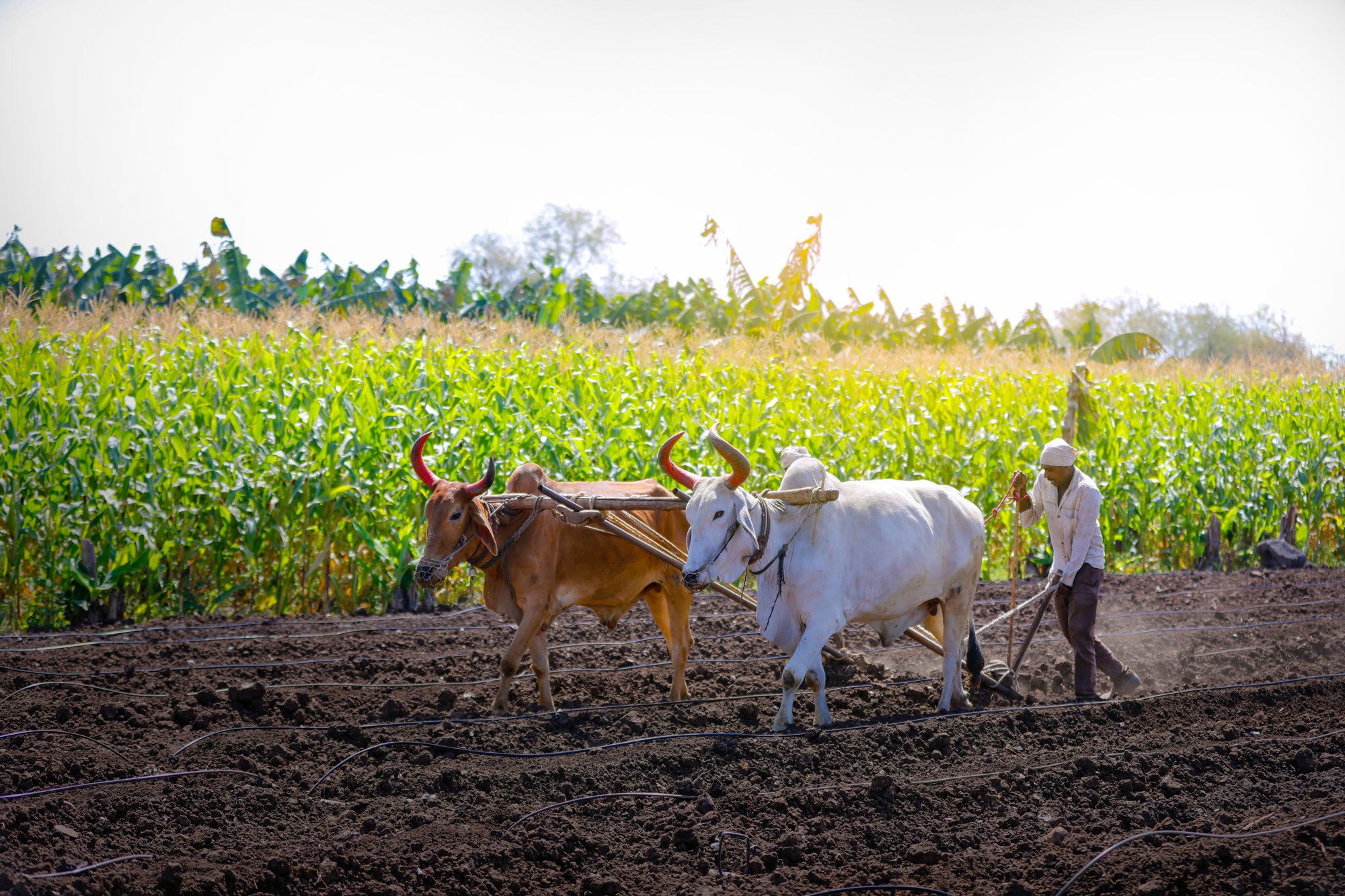
Choose Organic For Health
Organic food offers better nutrition, free from chemicals, and supports farmers. It helps protect nature, strengthens immunity, and ensures healthier lifestyle choices every day.
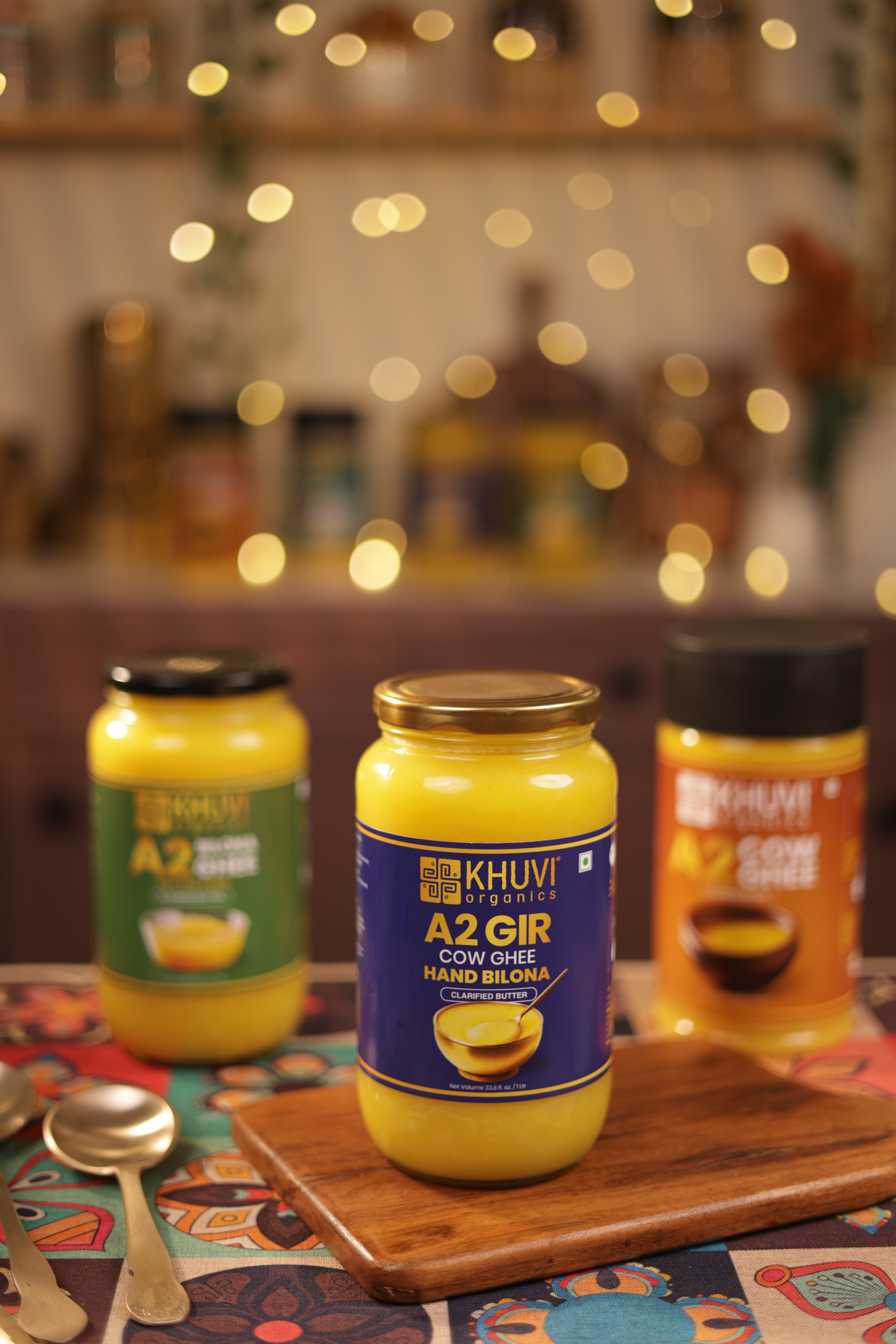
Organic Food For Wellness
Pair text with a video to focus on your chosen product, collection, or blog post. Add details on availability, style, or even provide a review.

Go Organic Stay Healthy
Organic food promotes sustainability, enhances nutrition, and prevents exposure to harmful pesticides. Choosing organic supports eco-friendly farming and encourages a healthy, balanced lifestyle for everyone.
Pure & Healthy
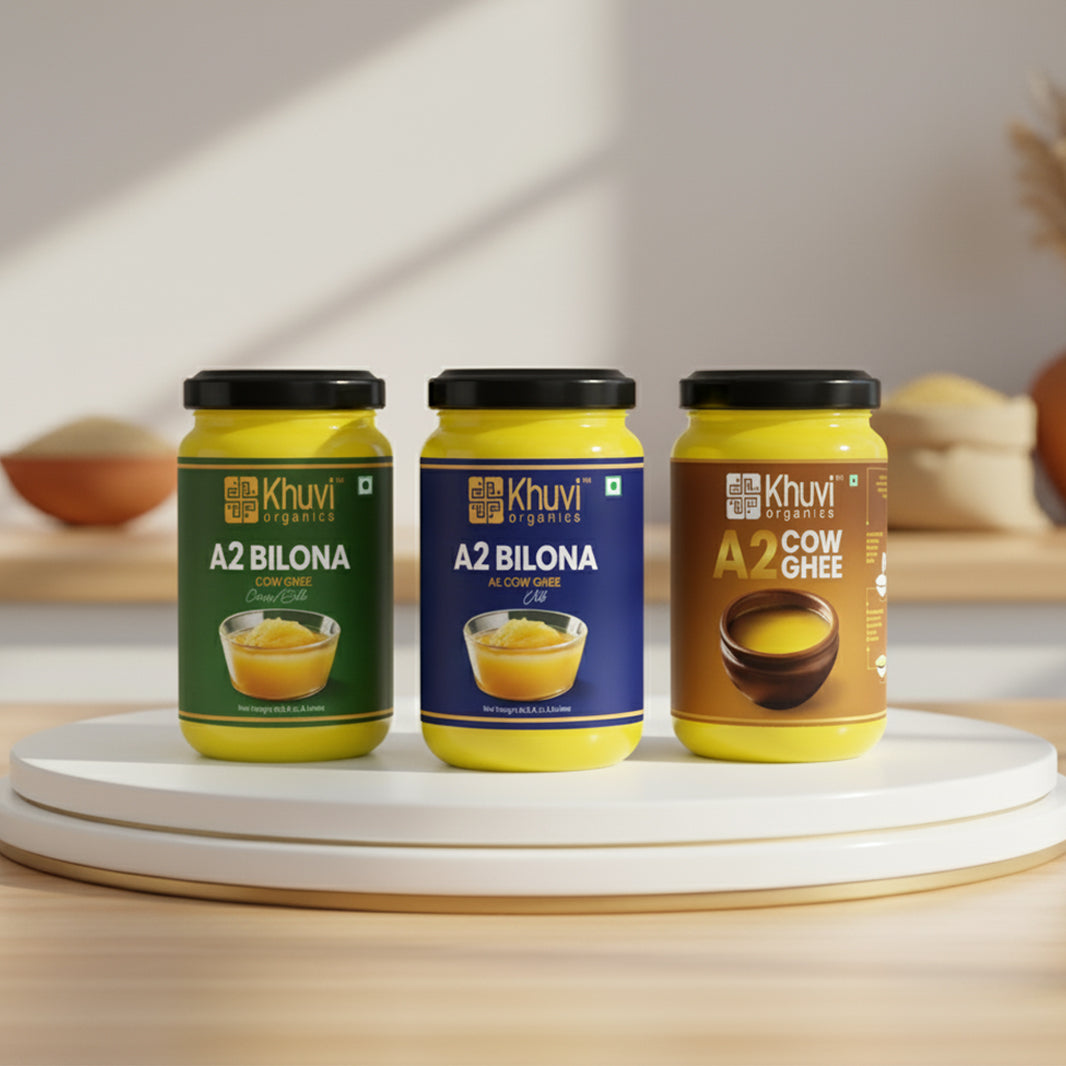
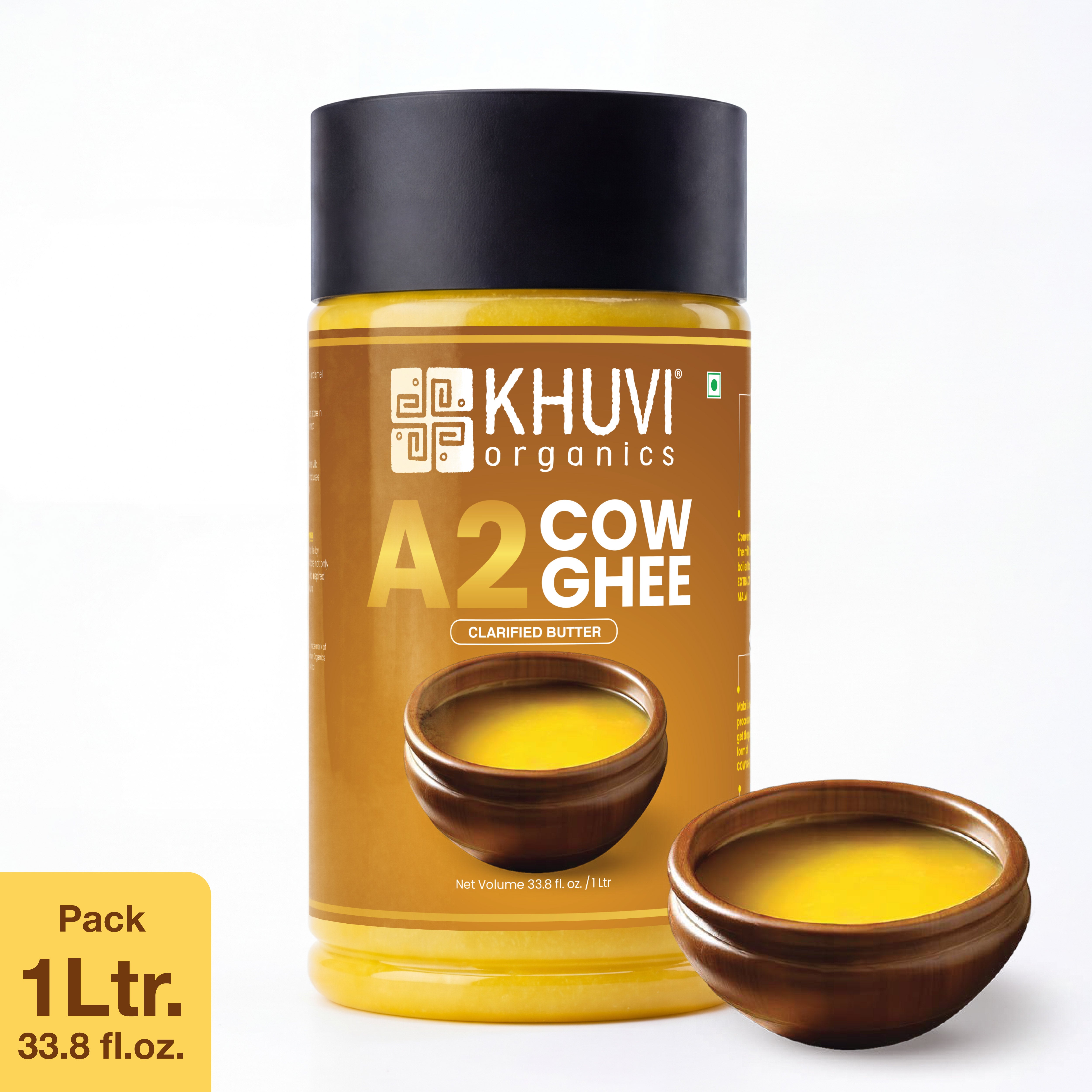
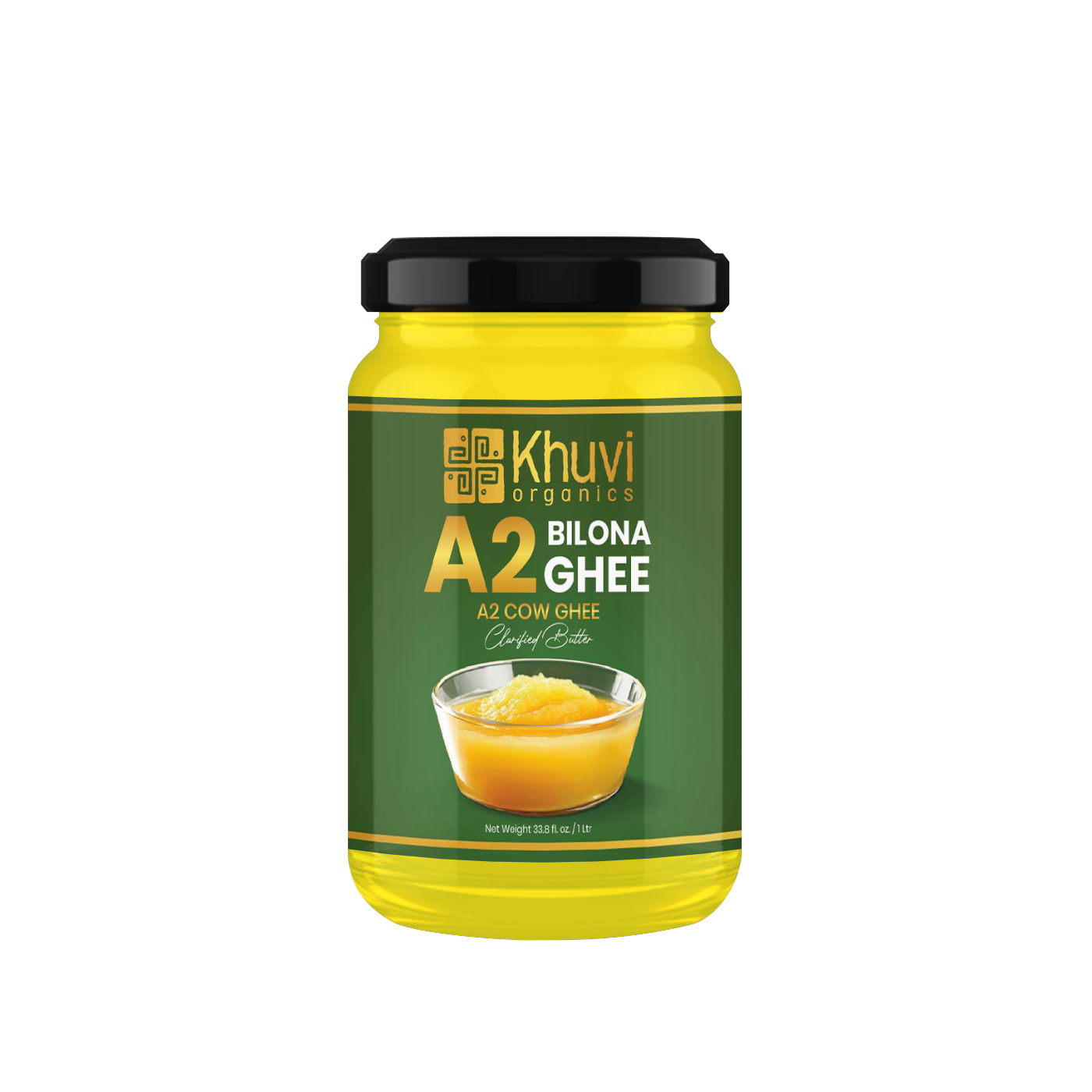
Our Range OF A2 Cow Ghee
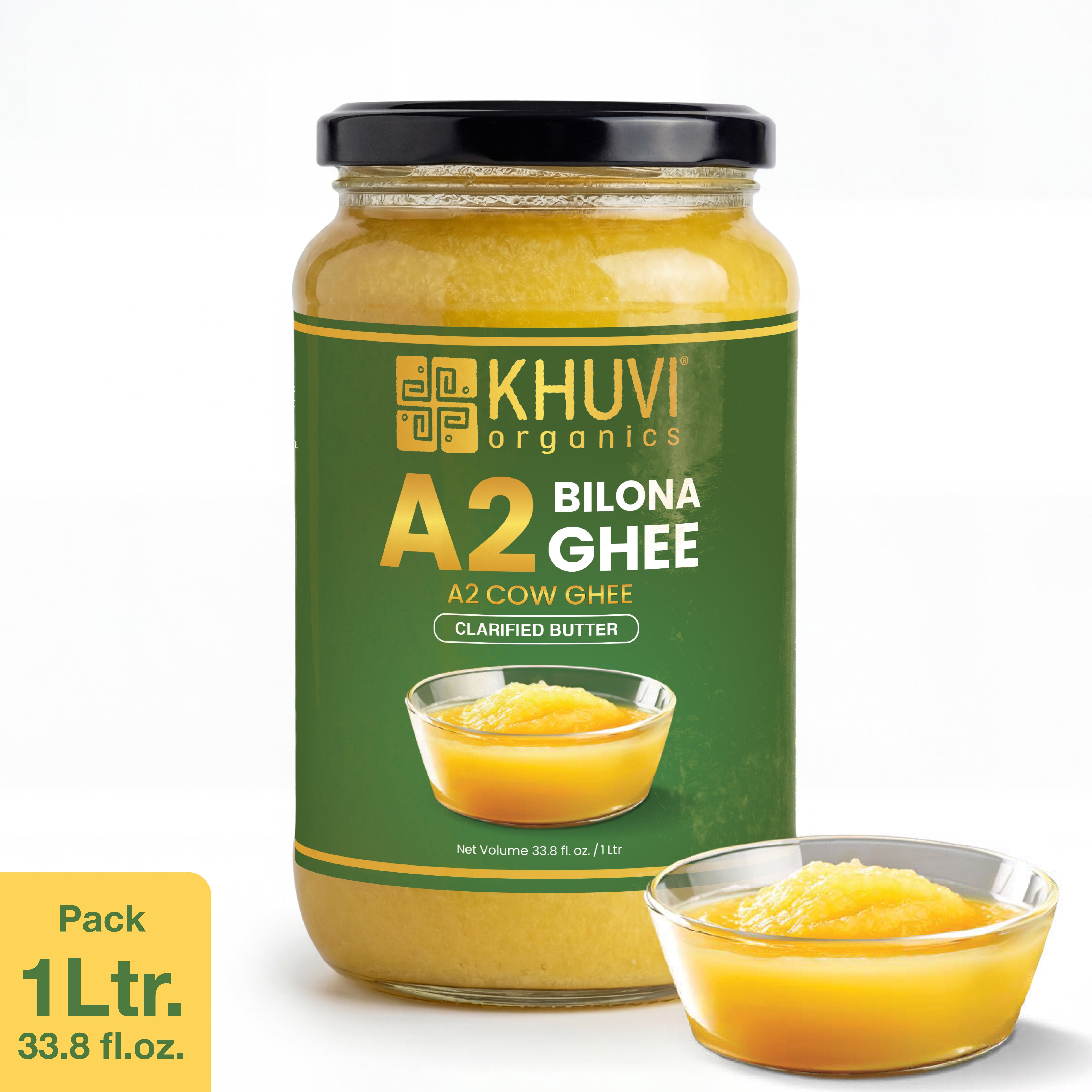
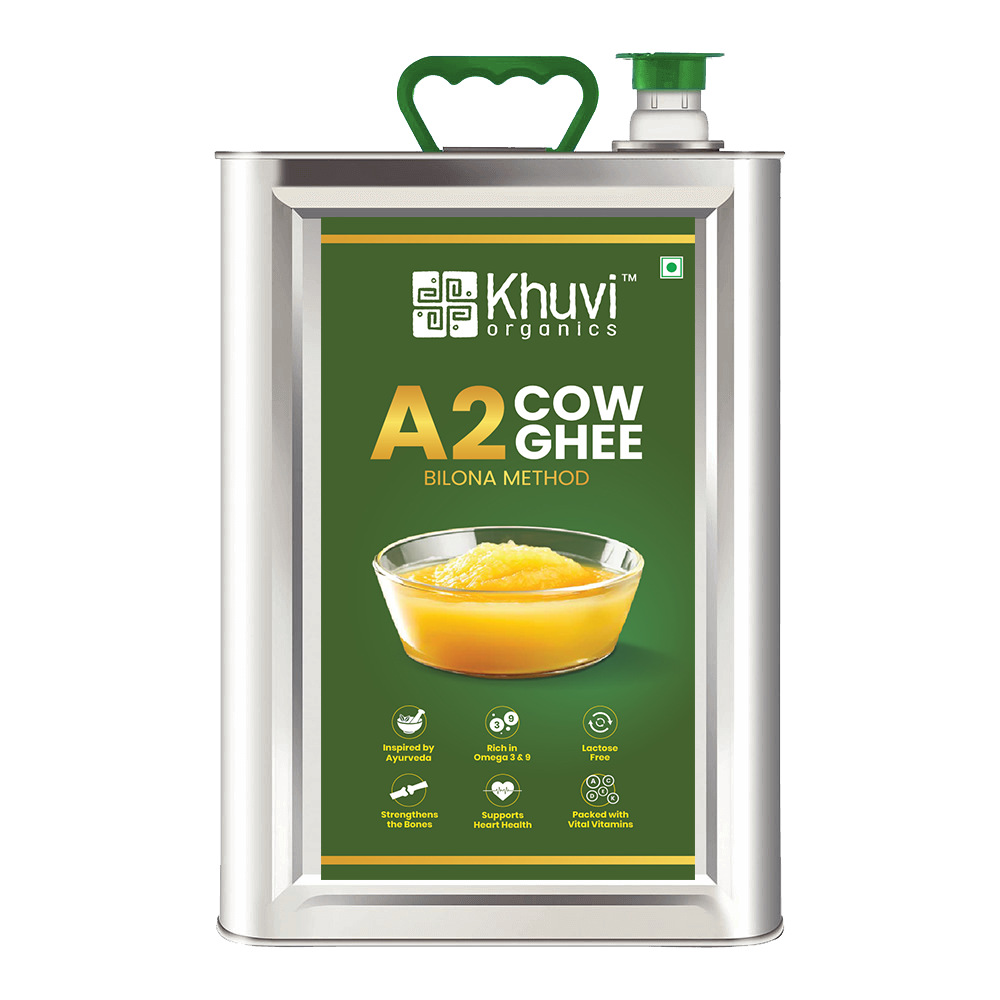
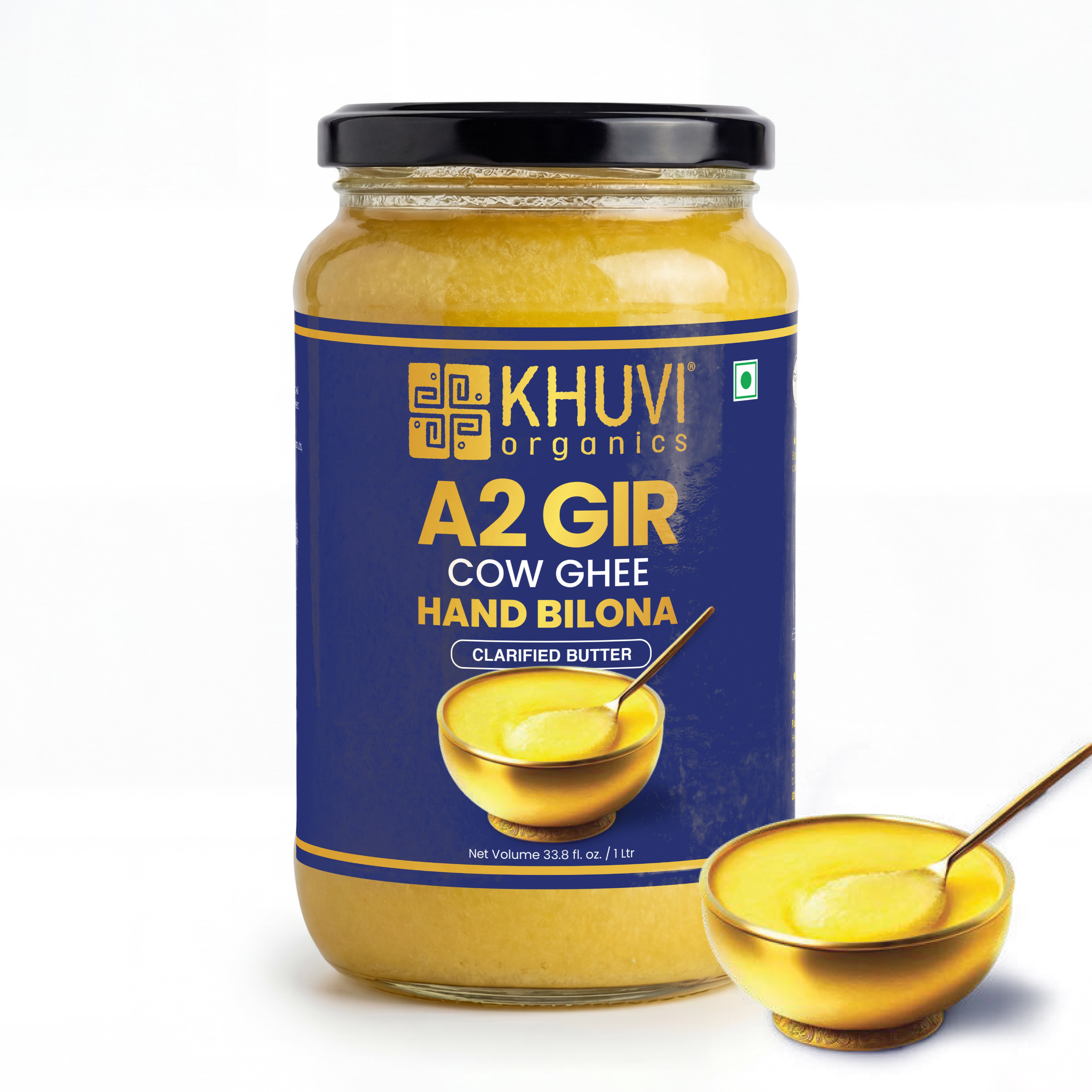
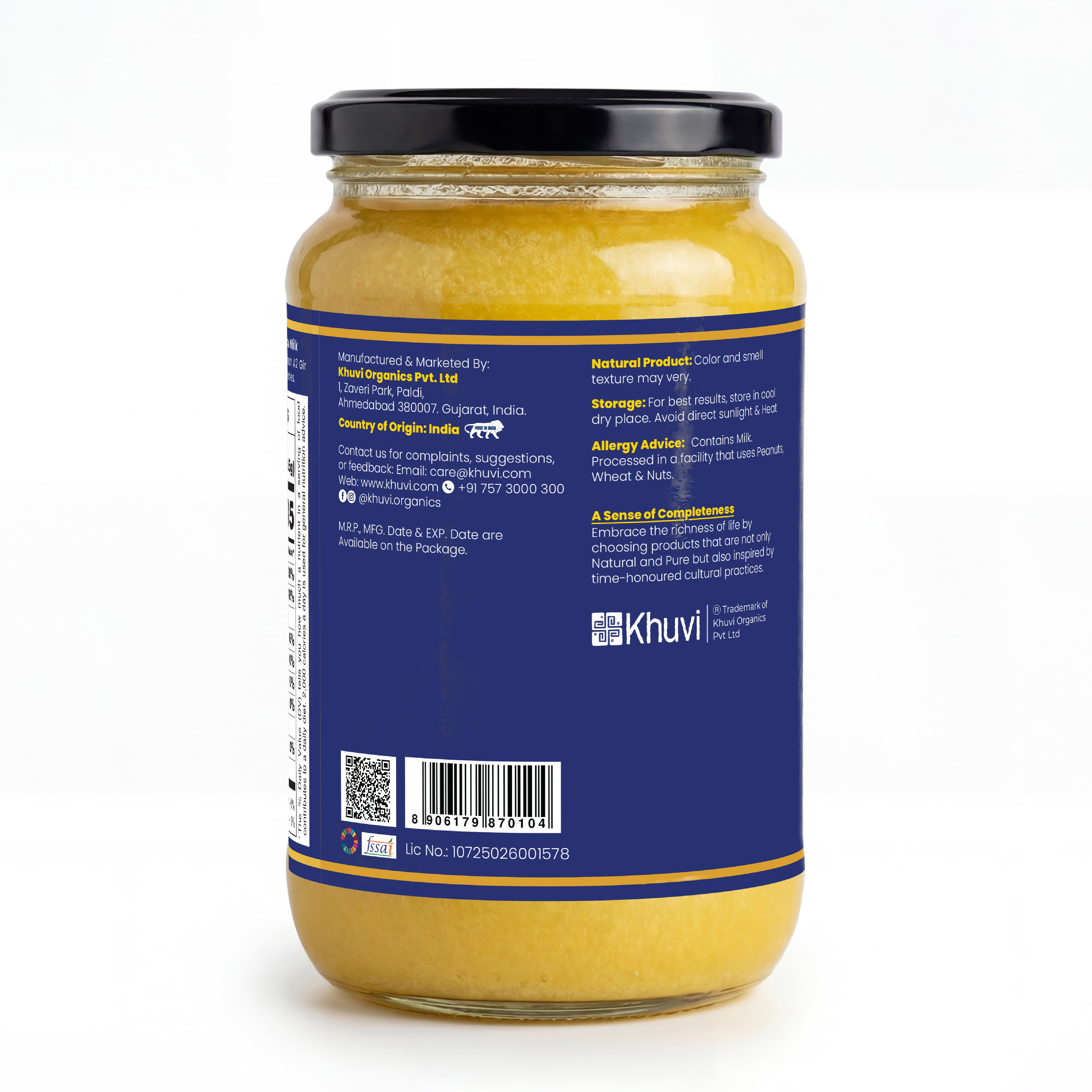
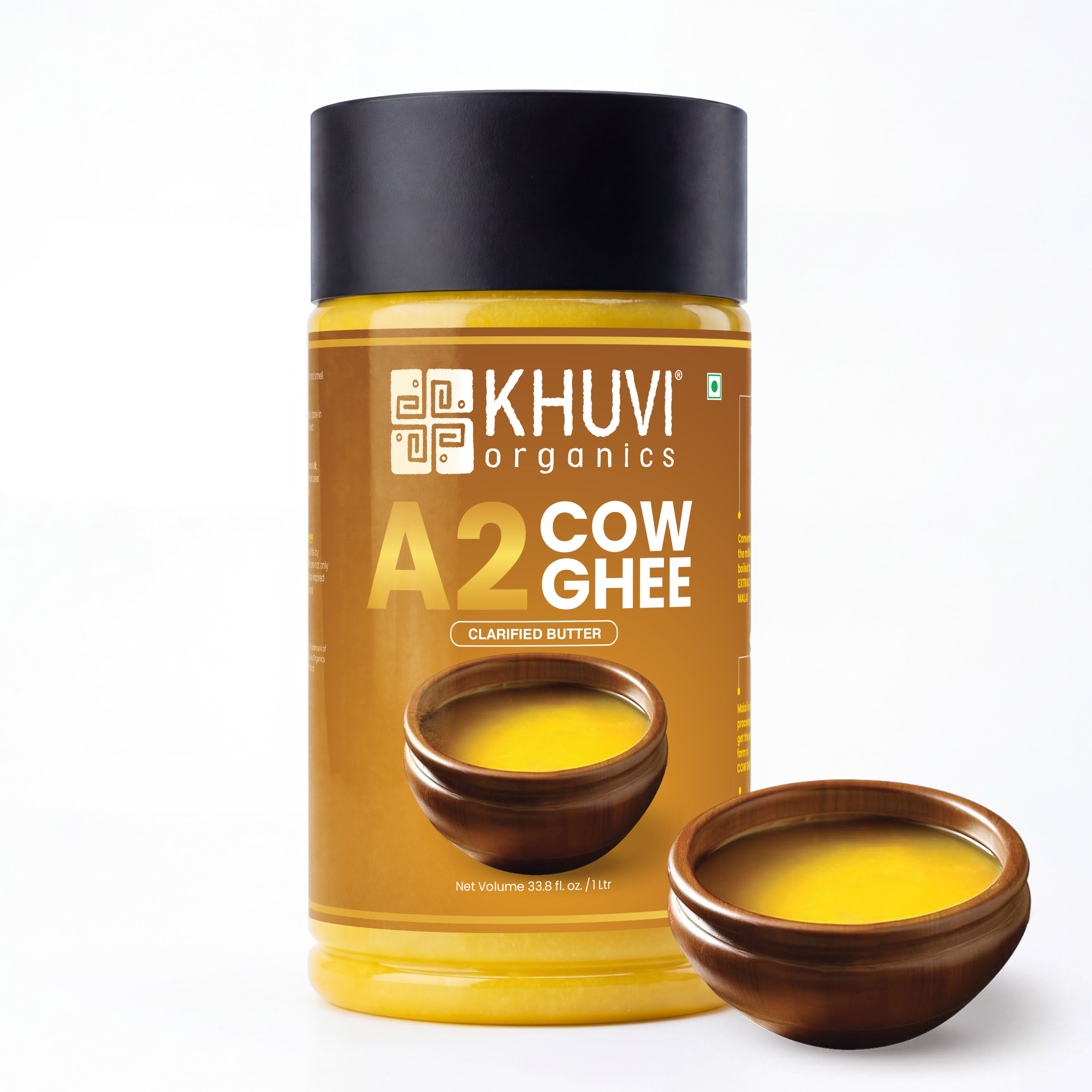
Hand Bilona A2 Gir Cow Pure Ghee

Fda certified quality

Sustainable Impact Partners

purity you can trust
FAQs
Please read our FAQs page to find out more.
Do organic products taste different from conventional food?
Many studies have shown that there is no such difference of taste in organic food and conventional food but the well-designed studies have researched and came to a conclusion like people favor the taste of organic food more, over conventional food. Because, the organic food has more antioxidants and other vitamins into it, which makes it tastier and better. And nowadays chefs do prefer to use organic food over conventional food not only for better taste but for better health benefits too.
What is authenticity of khuvi?
Khuvi’s authenticity lies in the certifications. As we go through a rigorous process of getting our farms as well as our processing certified. Also, we are getting certified by well-known accredited certification bodies.
Difference between organic and conventional food?
Growing
- Organic grown with natural fertilizers (manure, compost).
- Conventional grown with synthetic chemical fertilizers, pesticides etc.
Weeds
In Organic weeds are controlled naturally (crop rotation, hand weeding, mulching, and tilling).
In conventional weeds are controlled with chemical herbicides.
- Pets
- Organic, pests are controlled using natural methods (birds, insects, trap crops) and naturally-derived herbal pesticides
- Conventional, pests are controlled with synthetic pesticides
History of organic farming?
- In an ancient India, the whole agricultural system was being practiced using organic techniques, and it lasted for almost thousands of years. For which animal waste (e.g. composted dungs, urine etc.), composted plants waste and other wastages were being used as fertilizer.
- In mid 1970s, the organic farming movement in India started for the Industrialization of Agriculture. And before that all the traditional farming was known as Organic Farming due to less usage of pesticide and toxins. For an example, Forest Gardening, an organic food production system, counted as one of the world’s oldest organic farming and organic food producing system.
- At Khuvi, Organic Farming doesn’t mean it is a return to the older methods our ancestors had but it is something what we have learned over several millennia.
Advantage of organic farming
- It helps to maintain environment health by reducing the level of pollution
- It reduces human and animal health hazards by reducing the level of residues in the product
- It helps in keeping agricultural production at a sustainable level
- It reduces the cost of agricultural production and also improves the soil health
- It ensures optimum utilization of natural resources for short-term benefit and helps in conserving them for future generation
- It not only saves energy for both animal and machine, but also reduces risk of crop failure
- It improves the soil physical properties such as granulation, good tilth, good aeration, easy root penetration and improves water-holding capacity and reduces erosion.
- It improves the soil’s chemical properties such as supply and retention of soil nutrients, reduces nutrient loss into water bodies and environment and promotes favourable chemical reactions.
Organic farming
Organic farming is a production system which avoids or largely excludes the use of synthetically compounded fertilizers, pesticides, growth regulators, genetically modified organisms and livestock food additives. To the maximum extent possible organic farming system rely upon crop rotations, use of crop residues, animal manures, legumes, green manures, off farm organic wastes, biofertilizers, mechanical cultivation, mineral bearing rocks and aspects of biological control to maintain soil productivity and tilth to supply plant nutrients and to control insect, weeds and other pests.